Outdoors & Local Life · Ranked by locals
The Coves of Cabo de Palos, Ranked by Someone Who Actually Swims Them
Guidebooks tend to lump our coves together as "pretty little bays". They are not interchangeable. One is a natural aquarium, one is where the old men of the village swim on New Year's Day, one hides behind a hamlet and one is doing a quiet impression of Mars. Here is the honest ranking, with the caveat that locals will argue about it forever.
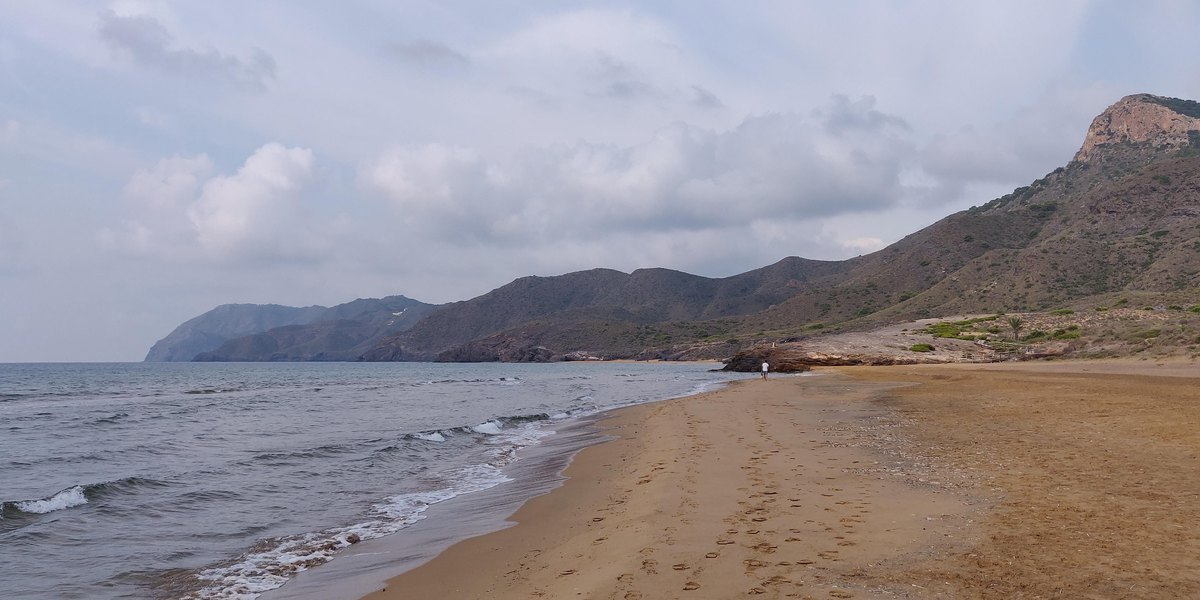
First, how the headland works
Cabo de Palos is a knuckle of volcanic rock pushed out into the Mediterranean, and the coves are the spaces between its fingers. That geology matters for your beach day: the calas on the headland are rocky, small and startlingly clear, while the sand accumulates on the sheltered side — at Playa de Levante in the village and, further north along the coast, at Playa Honda. Wind decides everything here. On a levante (easterly) day the exposed coves fizz like soda water and Levante beach gets its little waves; on a westerly the same coves turn to glass. Locals check which way the flags on the harbour point before deciding where to swim, and now you can too.
7. Cala del Descargador
The name gives its history away — this is where boats once unloaded their cargo, in the days before the harbour. It sits on the southern side of the village: pebbles rather than sand, a working, unpolished feel, and hardly any visitors even in August. Seventh place is almost unfair, because the snorkelling along its rocky arms is genuinely good and the sunsets are enormous. But your feet will want reef shoes, and comfort-wise it can't compete with what follows. Come for an hour of underwater exploring, not for a day on a towel.
6. Cala Medina
Blink on the coastal path between the village and Cala Flores and you will miss it. Cala Medina is small, rocky and completely without services — which is exactly why the people who love it love it. On a weekday morning outside high summer you will very likely have it to yourself, with just the sound of water working the stones. Swimmers who prefer their sea private rank it far higher than sixth. Families with buckets and spades should keep walking.
5. Cala Roja
The red one, and the rock really is red — iron-stained volcanic stone that glows at the end of the day and makes everyone's photos look better than they deserve. It faces the open sea, so it is at its best on calm days, when the contrast between rust-coloured rock and turquoise water is the closest this coast gets to showing off. Rocky entry, no facilities, moderately visited. Bring the snorkel: the boulders below the waterline hide octopus for anyone patient enough to stare at one spot for two minutes.
4. Cala Flores
A pocket of sand below a small hamlet, five minutes' drive (or a pleasant half-hour walk) from the village. Cala Flores is the family secret of the area: sheltered, gently shelving, small enough that children can't get far, with sand for the castle-building years and rocks at the edges for the snorkel years. In August the secret is fairly well out; in June, September or at nine in the morning any day, it is a small paradise. No bars, no sunbeds — carry in what you need, carry it out again.
3. Cala Fría
Directly under the lighthouse, deep, cold-named and beloved. This is the village's swimming club in all but name: the year-round bathers do their lengths here in January, teenagers dare each other off the rocks in July, and there is a small crescent of sand for everyone else. The water gets deep quickly and stays exceptionally clear, which makes it the best pure swimming cove on the headland — and, with the lighthouse rearing straight overhead, comfortably the most dramatic backdrop. If you swim one length of one cala on your holiday, make it this one.
2. Playa de Levante
Second place will scandalise the cala purists, but honesty wins: the village beach is the one you will actually use most. Proper sand, gentle entry, calm mornings, the promenade running along the back with the whole village — cafés, ice cream, showers, your bed — a few steps away. Small children paddle at the shore while the rocks at either end give older ones their first honest snorkelling, fish included. It fills up on August afternoons, as everything does; at nine in the morning, any month of the year, it is close to perfect. The beach that does everything, right where you live.
1. Cala Túnez
And the crown stays where every local knew it would. Cala Túnez, tucked into the lighthouse headland, is a natural swimming pool: sheltered from almost every wind, floored with rock and seagrass, and so clear that on a still day boats seem to float on air. It is the finest easy snorkel on this coast — bream in clouds, damselfish, the occasional grouper below the drop-off — and the reason half the children of Cabo de Palos fell in love with the sea. It is small and it is loved, so in August arrive early or late. The rest of the year, it is simply the best hour you can spend in the water without a boat.
Beyond the headland: the wild card
Fifteen minutes west, the beaches of Calblanque Regional Park — long, dune-backed, without a single building — belong in a different category and a different article. If the ranking above is about coves you can walk to with a towel over your shoulder, Calblanque is the expedition: pack water, pack shade, and expect to wonder how a coast like this survived untouched.
Practical notes, learned the hard way
Reef shoes turn every rocky cala from an ordeal into a pleasure — the village shops sell them for a few euros. None of the calas has services, so water and shade travel with you. The seagrass you will swim over is Posidonia, a protected marine plant that keeps this water clear; admire it, don't anchor in it, don't uproot it. And the golden rule of timing on this coast: mornings are calm, afternoons bring breeze. Swim early, lunch long, return for the evening light.
Your base on the beach · Playa de Levante
Stay at 95Lighthouse
A front-line villa for up to 10 guests with a private infinity pool, jacuzzi and sea views — from the terrace to the promenade, from the promenade to the sand. Open year-round; best value October to Easter.
Questions travellers ask
Which cove in Cabo de Palos is best for snorkelling?
Cala Túnez, under the lighthouse — sheltered, shallow and extraordinarily clear, with abundant fish. The rocks at either end of Playa de Levante are the easiest option for children's first attempts.
Are the coves of Cabo de Palos sandy?
Mostly no — the headland calas are rock and pebble, which is why the water is so clear. For sand, use Playa de Levante in the village, Cala Flores, or the wild beaches of Calblanque fifteen minutes away.
Do the coves have bars or sunbeds?
No. None of the calas has services of any kind — that is much of their charm. Bring water, shade and reef shoes, and take everything back with you. Playa de Levante, in the village, has the promenade and cafés at its back.
Which cove is best for small children?
Playa de Levante for sand, gentle entry and everything nearby; Cala Flores as the quieter sandy alternative. The rocky calas suit confident swimmers better.
When are the coves least crowded?
Any month outside July and August, and any day before ten in the morning. In high summer, Cala Túnez and Cala Flores fill first; Cala Medina and El Descargador almost never do.